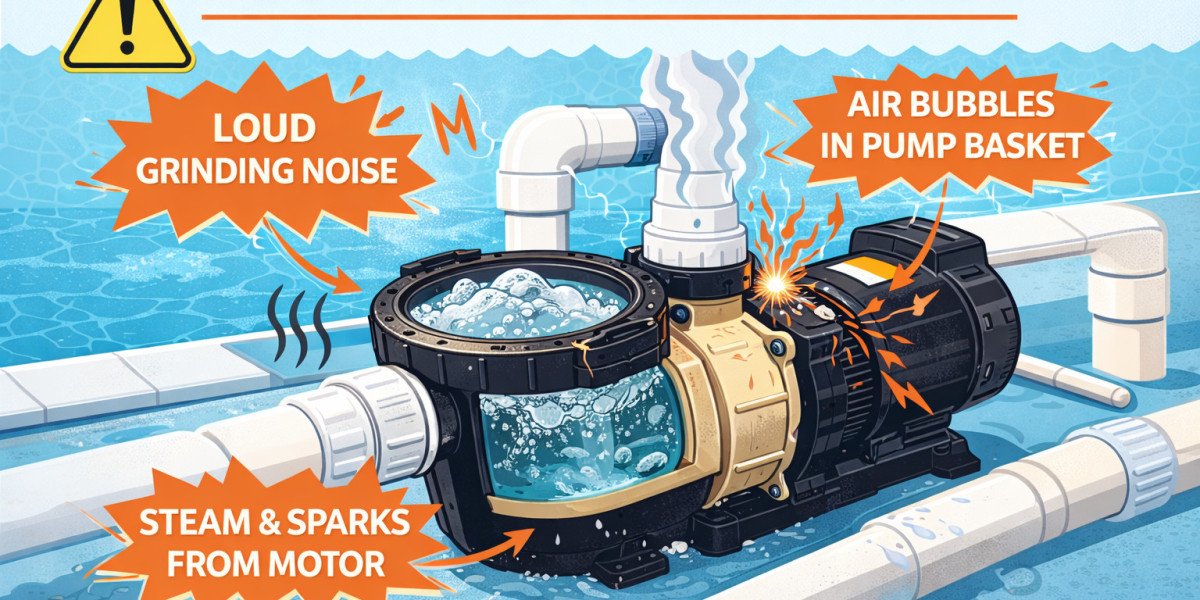

A properly working pool pump should produce a gentle, steady humming sound — not grinding, screeching, rattling, or banging. If your pool pump suddenly becomes noisy, it’s usually an early warning sign that something is wrong. Ignoring it can lead to expensive repairs, reduced circulation, or even complete pump failure.
Here are the 5 most common reasons your pool pump is making noise — and what you should do about each one.
1. Air Is Getting Into the Pump (Cavitation)
One of the most common causes of a loud pump is air entering the system. When air mixes with water inside the impeller, it creates a rough, gravel-like sound often described as marbles or rocks inside the pump.
Common causes
Low pool water level
Cracked suction pipes
Loose pump lid
Worn O-ring
Clogged skimmer basket
Why it matters
Air reduces water flow and can overheat the pump motor, shortening its lifespan.
What to do
Top up the pool water level
Check the lid seal and lubricate the O-ring
Inspect suction plumbing for leaks
Clean skimmer and pump baskets
2. Worn or Failing Motor Bearings
If your pump produces a high-pitched screech or whining noise, the motor bearings are usually the culprit. Bearings wear out over time due to heat, moisture, and age.
Signs
Loud metal squeal
Noise continues even after turning off water flow
Gets louder each week
Why it matters
A seized bearing can completely destroy the motor — and motors are often the most expensive component to replace.
What to do
You’ll need a motor repair or replacement. Turning the pump off when the noise starts can prevent further damage.
3. Debris Stuck in the Impeller
Sometimes small debris bypasses the basket and becomes trapped in the impeller. This causes a grinding or rattling sound and reduces water circulation.
Common items found inside
Small stones
Hair ties
Seeds
Broken plastic
Leaves fragments
Why it matters
Blocked impellers make the pump work harder, increasing electricity use and damaging internal components.
What to do
Turn off power at the breaker and have the impeller cleaned. Never stick fingers inside without disconnecting power.
4. Pump Is Not Mounted Properly (Vibration Noise)
A pump sitting unevenly on concrete or pavers can cause loud vibration and humming noises.
Signs
Loud humming
Equipment pad vibrating
Noise changes when you press on the pump
Why it matters
Constant vibration loosens fittings and shortens motor life.
What to do
Ensure pump sits level
Install rubber anti-vibration pads
Tighten mounting bolts
5. Clogged or Dirty Filter Causing Pressure Build-Up
When the filter is dirty, water struggles to pass through the system. The pump compensates by working harder — creating a deep, struggling humming noise.
Symptoms
High pressure gauge reading
Weak return jets